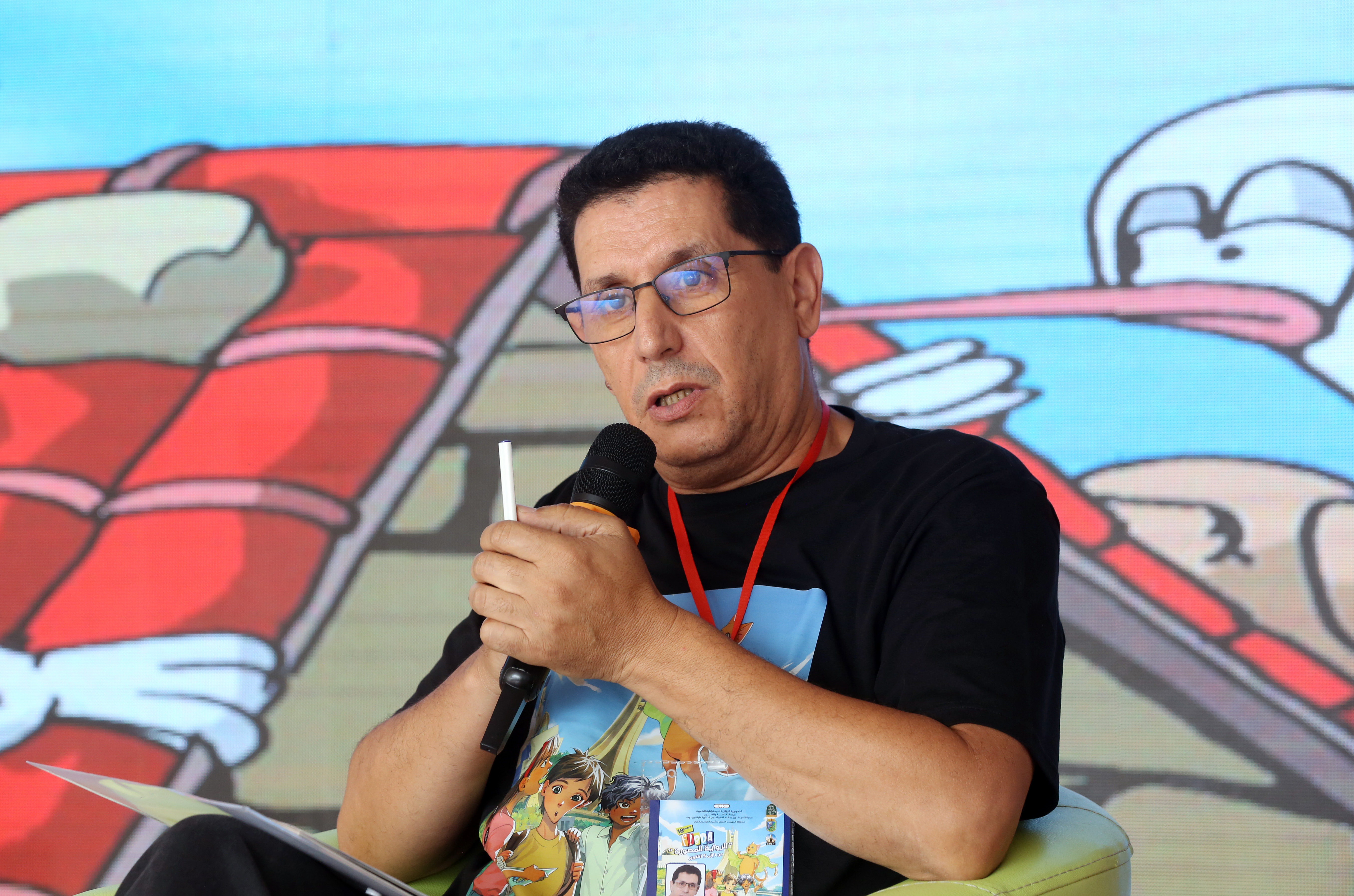
The first conference of the Algiers International Comics Festival (FIBDA), held on Friday, October 2, placed memory, identity and graphic creation at the heart of the discussions. Comic artist Kamel Bentaha, known by his artistic name Kam's, presented Tifghal as a way of telling the story of Algerian culture by drawing on memory without becoming confined by it.
"Between memory and modernity, Tifghal is another way of telling the story of Algerian culture," the artist explained. For him, this approach draws on the richness of Algeria's oral heritage. "My aim is to draw on memory without damaging it, without distorting it, while at the same time avoiding becoming frozen within that memory," he said.
This approach lies at the heart of his understanding of artistic creation. "An artist creates, but never in a vacuum," Kamel Bentaha stressed. Through his work, he said, he expresses "a vision, a culture, a history, an imaginary world." A creation that travels through time and eventually becomes part of memory, before encountering a society with its values, traditions, dreams and, at times, its wounds.
For Kam's, comics already encompass several major graphic traditions, each carrying its own history. He cited manga, comics, fumetti, Spanish tebeo and Chinese manhua in particular. "They have their own history. But Algeria also has a history, a memory and an imaginary world that deserve to have their own graphic language," he noted.
It was from this line of thinking that the idea of Tifghal emerged. The aim, he explained, is not simply to find a new term for comics or for a work belonging to Algeria's ninth art. "Tifghal is therefore not merely a new word to designate a ninth-art book, an Algerian comic or manga," he said. Above all, he explained, it is about giving a name to a form of creation that can identify with "our memory, our society and our country."
The approach is thus based on a balance between heritage and contemporary creation. It is not about reproducing memory, but about bringing it to life in a different way, giving it a graphic expression capable of engaging with the present.
Kamel Bentaha also spoke about his own career and the first signs of interest this approach has generated in academic circles. Two of his Tifghal works have notably been translated into French. At Mouloud Mammeri University of Tizi Ouzou, in the Amazigh department, five final-year projects have been devoted to his works, while two other studies have been carried out in Béjaïa.
For the comic artist, these experiences could represent the first building blocks of a broader line of inquiry. "Tomorrow, we could have a working basis for creating a Tifghal school," he suggested.
The inclusion of Tifghal in the FIBDA programme marks, in his view, an important step in this process. Thanking the festival's team and its commissioner, Salim Brahimi, he noted that this was the first time the term had appeared in the programme. For him, this recognition opens up a new space for reflection on comics, memory and Algerian identity.