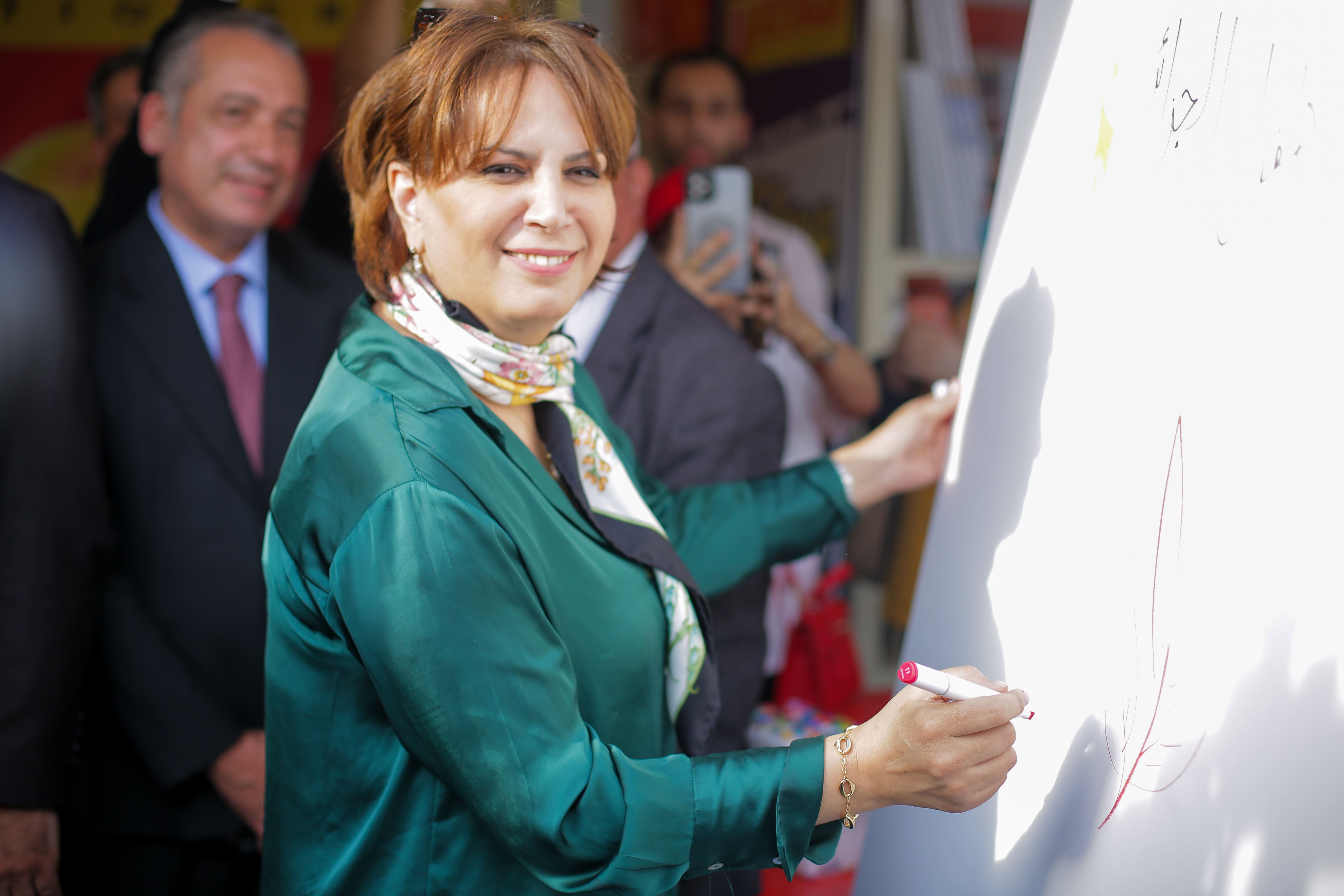
Minister of Culture and Arts Malika Bendouda highlighted, at the opening of the 18th edition of the Algiers International Comics Festival (FIBDA), the prominent position the event has now established within Algeria’s cultural landscape and internationally. Describing it as a “renewed pleasure” to attend the festival’s opening, she said FIBDA is “one of the most important festivals in Algeria.”
“It is a source of pride for us, as it has already reached its 18th edition. It is an event that has established itself as both a professional and popular platform, attracting a very large audience,” the minister said in her address, also highlighting the festival’s international dimension. “It is also an international event that has managed to become a reference in its field, offering the world an opportunity to discover a country that is a leading force in culture and the arts,” she added.
Strong international recognition from UNESCO
Ms. Bendouda also highlighted the international recognition FIBDA now enjoys, particularly through its presence on UNESCO’s cultural policies monitoring platform, which is dedicated to documenting and recording cultural practices around the world.
“We are proud to see that the major cultural events under our supervision enjoy the trust of partners and stakeholders in the sector,” she said, describing UNESCO’s listing of the festival as “recognition of this major, specialized and exceptional cultural event in the region.”
This recognition, she noted, is the result of long-term work that has materialized thanks to the “efforts of Algerians and the organizers of this festival, efforts that began several decades ago and are still continuing today.”
Art in the service of training
The minister also devoted part of her address to the very nature of comics, which she considers a multidisciplinary art capable of engaging with many other artistic disciplines.
“It is an art that draws from all other arts and feeds the imagination,” she explained, referring in particular to experiences of adapting comics into animated works. She also highlighted the opportunities offered by the ninth art in terms of creation, transmission and the promotion of heritage.
The minister also called for greater involvement of art schools in cultural events, particularly in providing practical training for young creators. Welcoming the participation of students from the Algiers Higher School of Fine Arts (ESBA) at FIBDA, she said their involvement allows them to gain first-hand experience through direct contact with professionals.
“Students must contribute to shaping the artistic identity of these cultural events,” she said, stressing that integrating students “into its workshops and activities” is one of the festival’s strengths, as it offers them “an opportunity for hands-on training.”
Honoring pioneers and fostering intergenerational transmission
In her address, Ms. Bendouda also placed FIBDA within a broader effort to preserve and promote Algeria’s artistic memory and heritage. She described the festival as an “essential showcase of the cultural diversity that Algeria has always embodied, and a new page in the book of Algerian artistic excellence.”
In this context, she recalled the role played by artists throughout the country’s history. “There is no doubt that our collective memory preserves numerous testimonies to the contribution of all forms of art to resistance, struggle and the building of a free and independent Algeria,” she said, stressing that this commitment remains “very much alive.”
The minister also paid tribute to the late artists Mahfoud Aider and Tayeb Arab, while welcoming the presence of Ahmed Haroun, creator of the iconic character Mqidech.
For her, “remaining faithful to our elders and founders is not limited to simply mentioning their names in passing; it means preserving their legacy and honoring their memory by renewing creative and cultural activity across all fields.”
She also emphasized the importance of providing new talents with “opportunities, spaces for expression and appropriate support,” enabling their “passion, vision and potential” to fully flourish.
Such transmission, she continued, depends on “training and guidance,” which are essential to ensuring “creative and productive transmission between generations.”
She finally called on festivals and cultural institutions to make the preservation of memory an integral part of their work.
“It is the responsibility of all festivals, institutions and cultural events in Algeria to preserve our artistic and cultural memory, never forget the pioneers, and fully recognize the role of the founders and great masters,” she concluded.